Proposal Design
The Scarborough Subway Extension Proposal
Client
Metrolinx and Infrastructure Ontario via Kiewit
Industry
Transit Infrastructure / Government Procurement
My Role
Lead Proposal Designer
Location
Canada
The Project
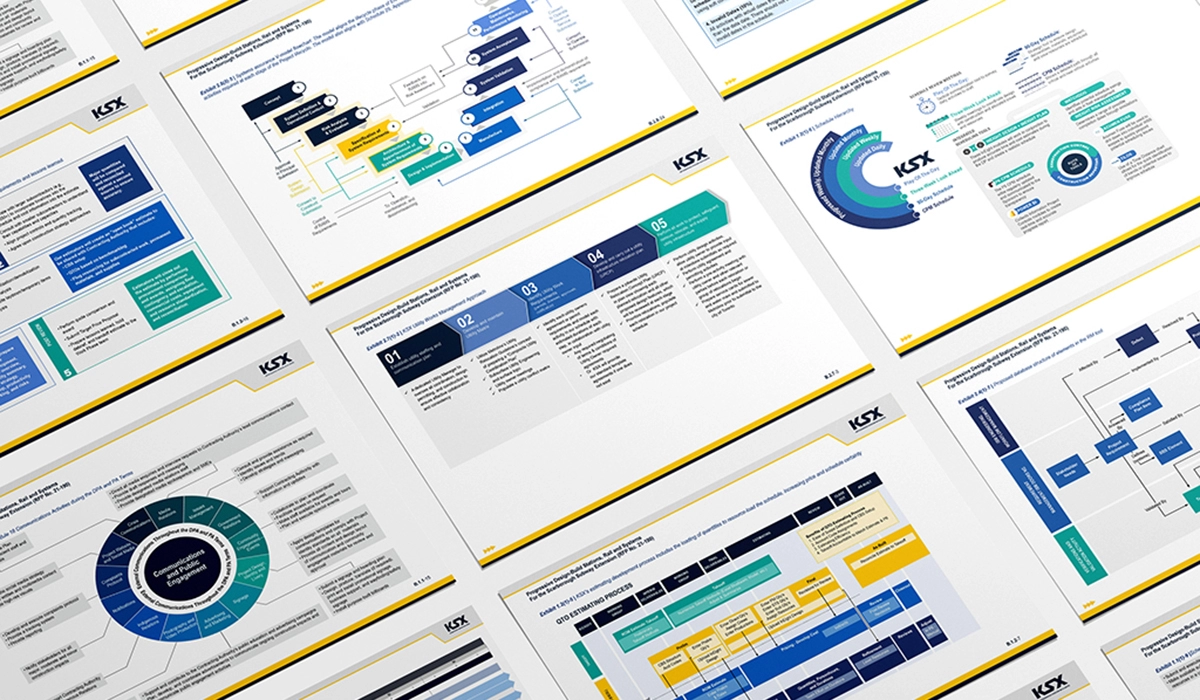
The Scarborough Subway Extension is one of Ontario’s major transit infrastructure projects.
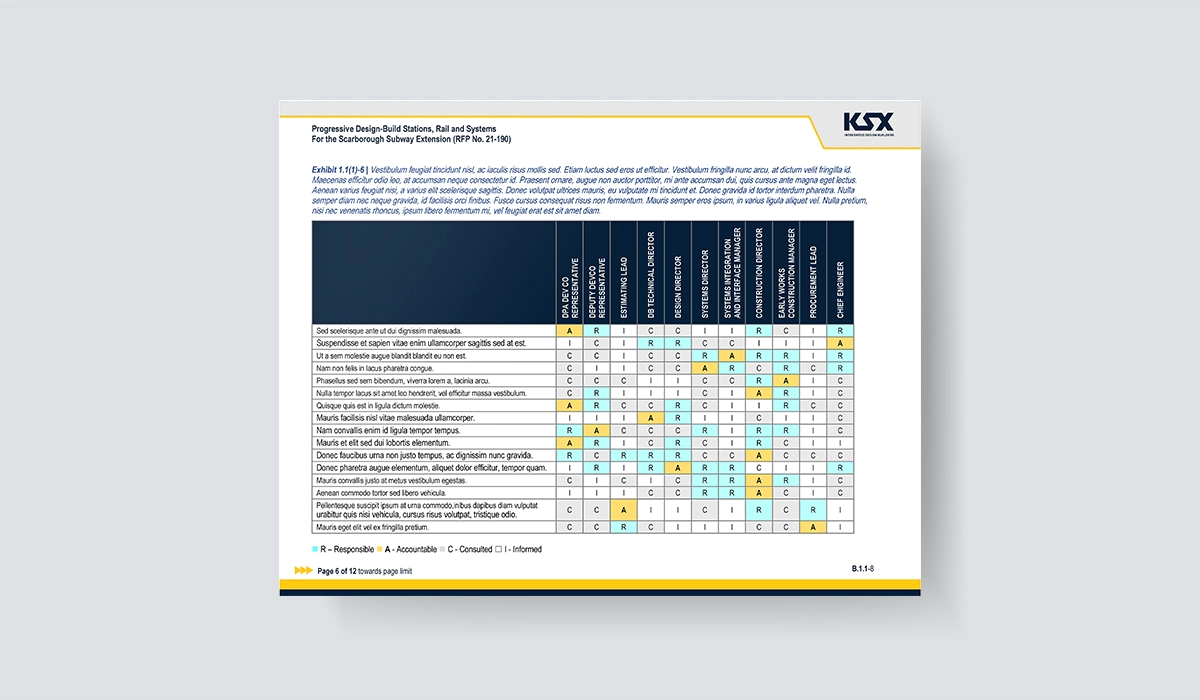
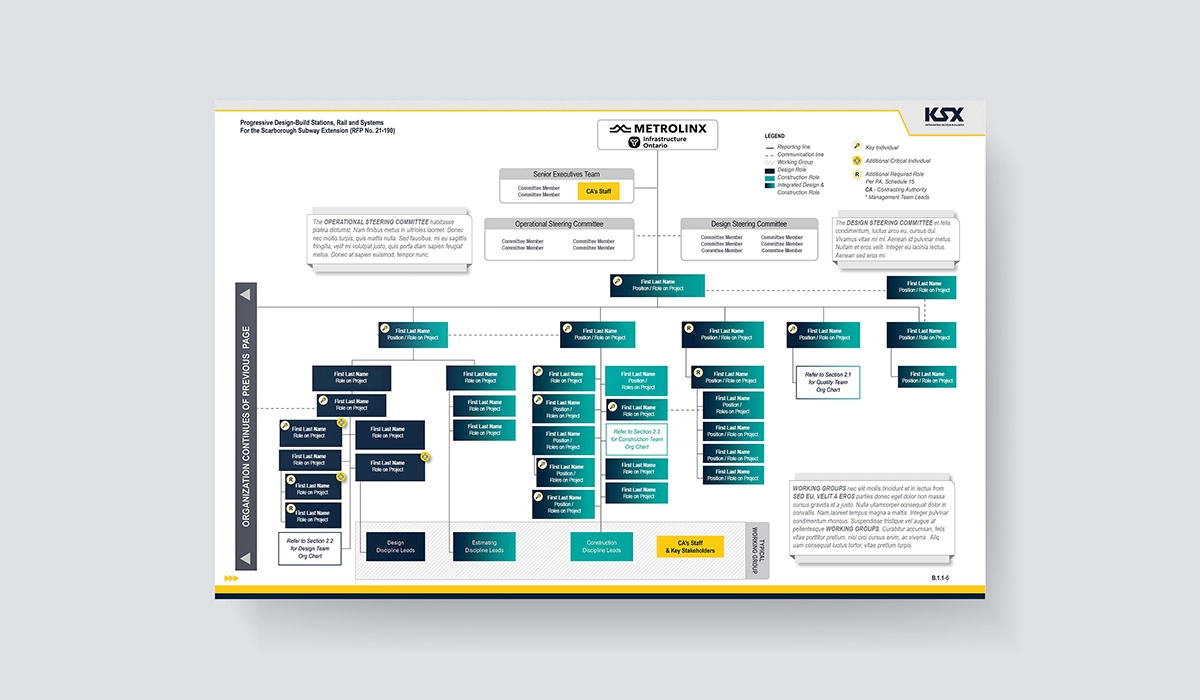
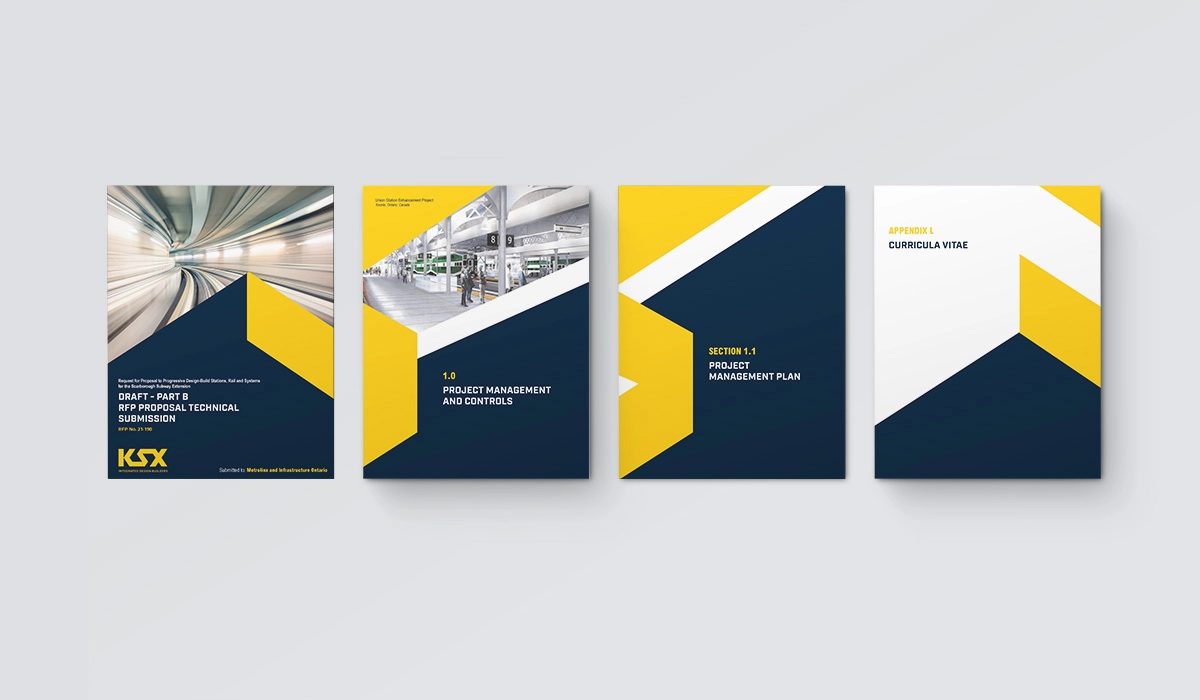
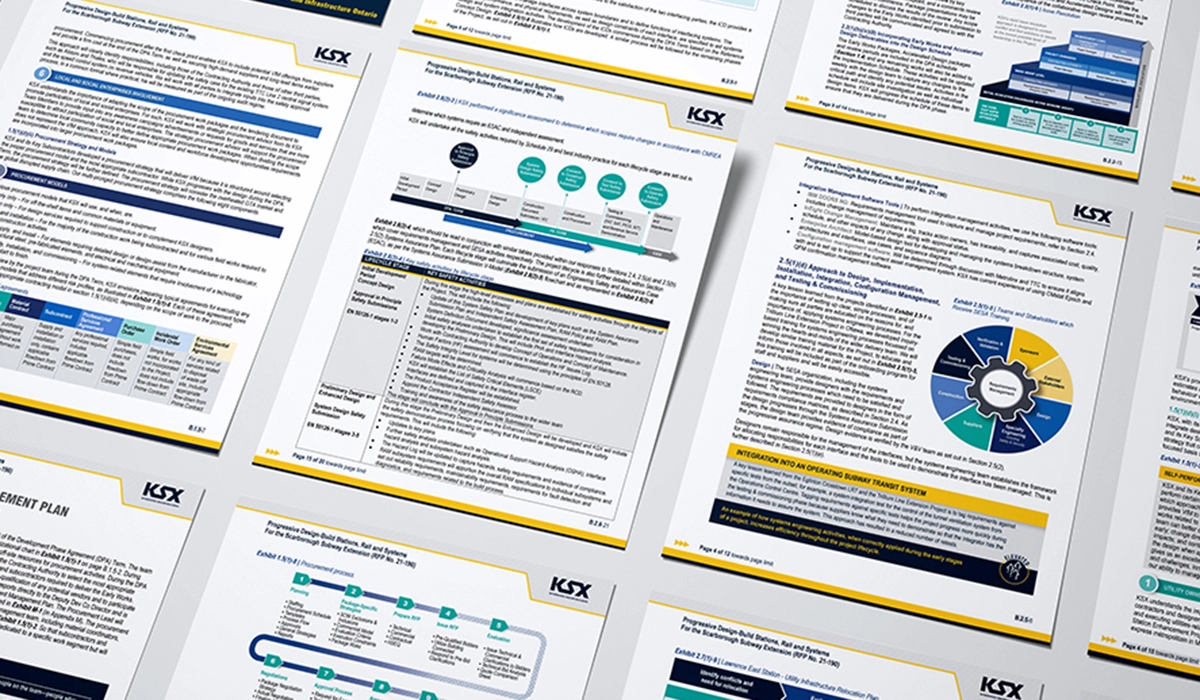
As lead proposal designer, I managed the full graphic scope of the proposal over a six-month production cycle. The work involved producing more than 450 graphics, including infographics, technical diagrams, organizational charts, and formatted proposal layouts.
I coordinated with engineers, project managers, business development leads, and additional design resources during peak production periods, ensuring the visual work remained clear, consistent, and aligned under sustained deadline pressure.
The proposal required more than visual polish. It required a scalable design system, a disciplined production workflow, and a clear visual language that could make a large, complex submission feel cohesive from beginning to end.
The Thinking
At the scale of this pursuit, design was both a communication challenge and a production management challenge.
With 450+ graphics in scope and content arriving continuously from a large multidisciplinary team, the priority was building a system that could absorb volume, variation, and revision pressure without losing coherence. The visual approach needed to support technical clarity while maintaining consistency across hundreds of individual pieces.
Every graphic decision served a single strategic goal: making the proposal feel like one unified submission with a clear visual voice, rather than a collection of separate technical contributions.
The production workflow was designed around the realities of large-team collaboration. Graphics were created in InDesign and Illustrator, then integrated into Word-based proposal documents so technical contributors could continue working directly in the files. This approach preserved design control over the visual elements while giving the broader team the access they needed to keep the submission moving.
Joining a new organization at the start of the pursuit added another layer of complexity. I had to build working relationships, establish trust, and demonstrate creative leadership while simultaneously managing the pace and volume of the proposal workload. The project required technical fluency, production discipline, calm communication, and the ability to make design decisions quickly under sustained pressure.
What This Demonstrates
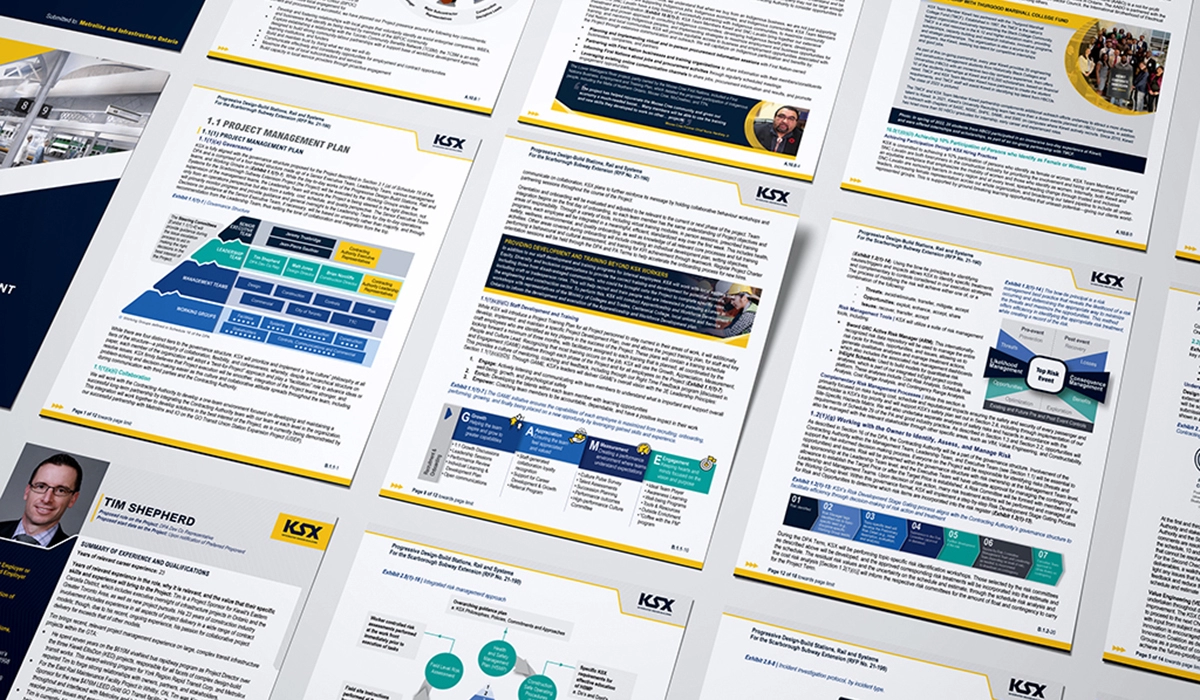
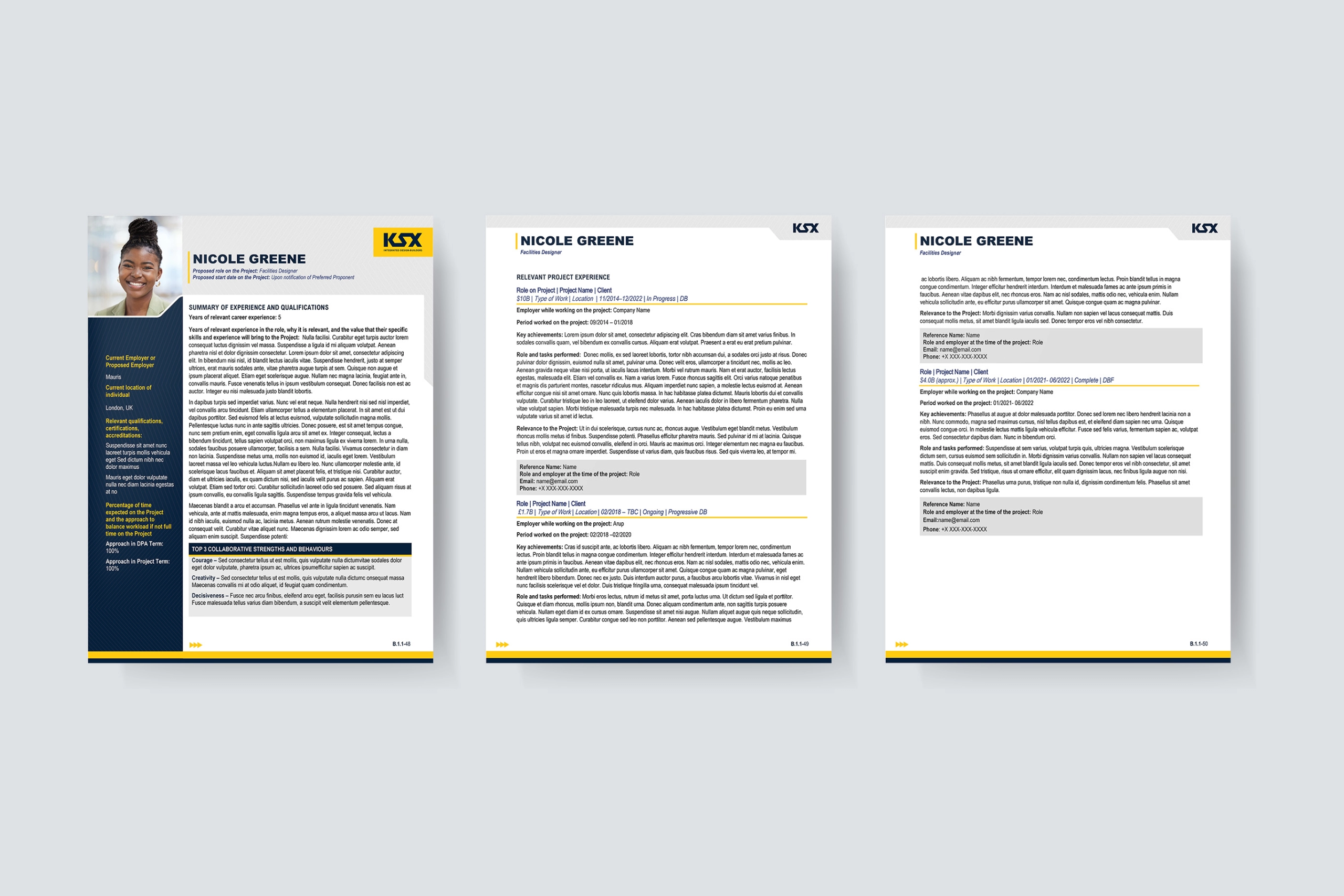
Note: Certain project passages have been temporarily replaced with placeholder copy (lorem ipsum) for confidentiality.