Case Study
The Subway Extension Proposal
Client
Metrolinx and Infrastructure Ontario (via Kiewit)
Industry
Government Procurement
Location
Canada
Timeline
Six months
My Role
Lead Proposal Designer / Creative Lead
Team Context
Embedded within the KSX consortium. Coordinating across multiple consultant firms and hundreds of technical and business development contributors.
Scope of Work
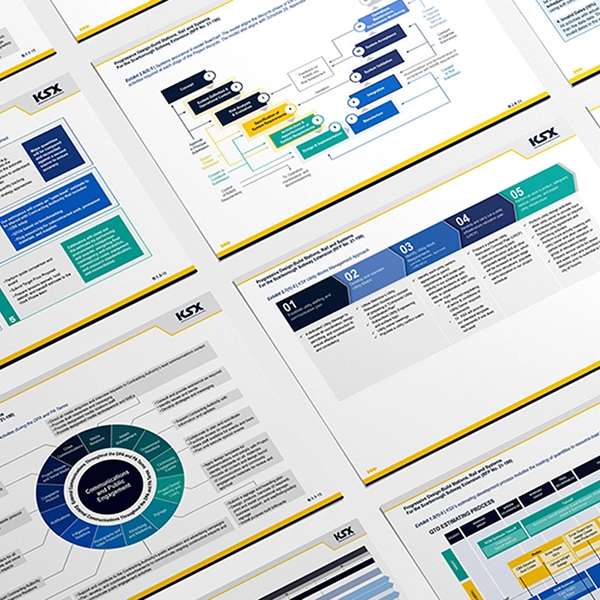
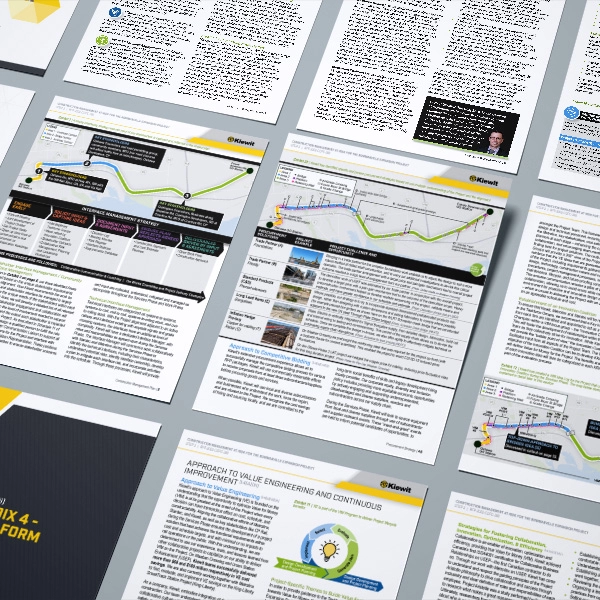
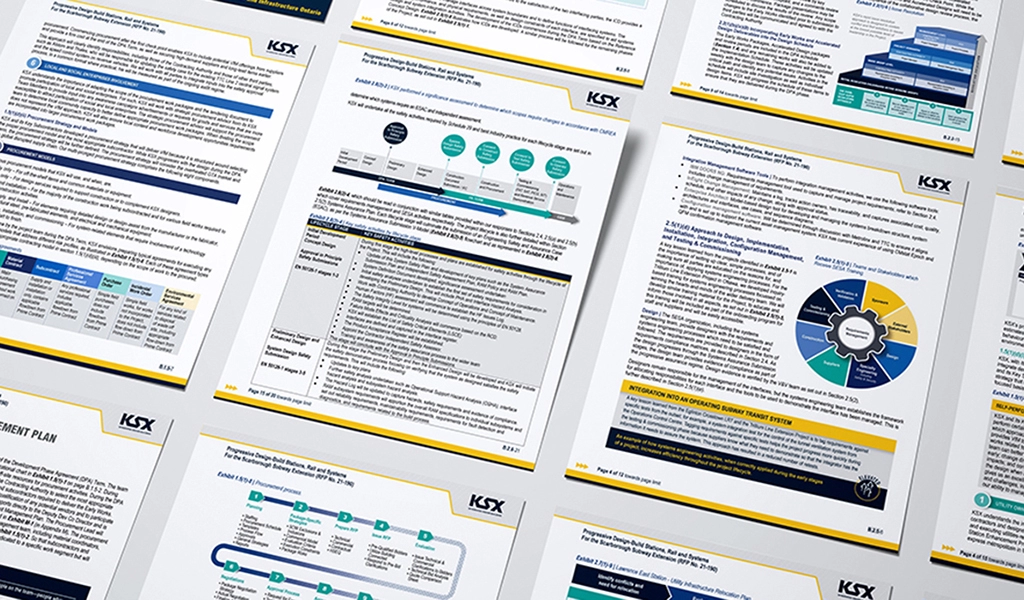
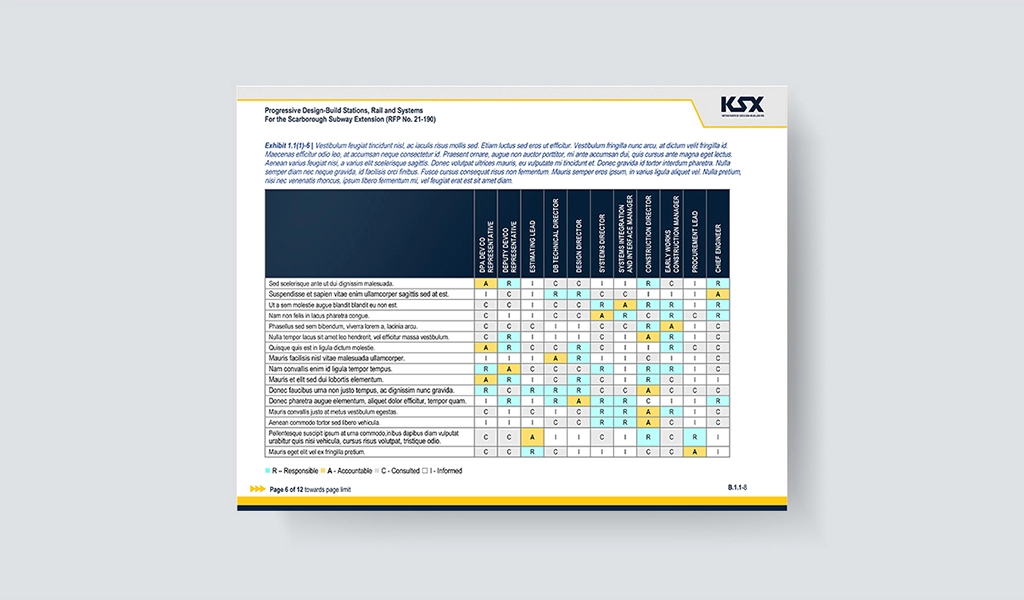
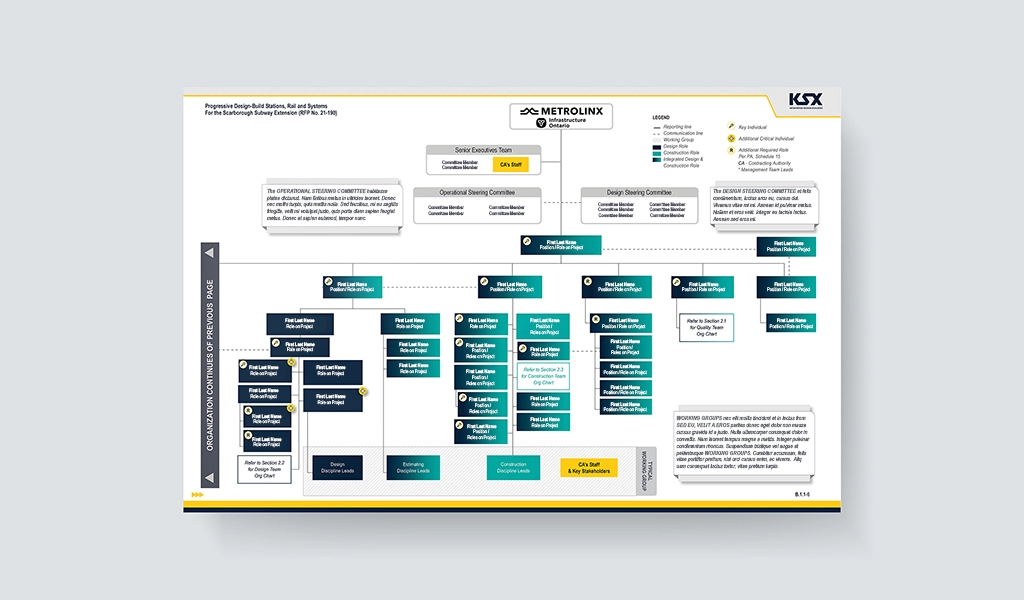
450+ graphics including infographics, diagrams, organizational charts, and full document layout across a large-scale government proposal submission.
The Brief
Metrolinx and Infrastructure Ontario are the province’s primary transit planning and infrastructure delivery agencies, responsible for overseeing some of the most significant capital projects in Ontario’s history. The Scarborough Subway Extension is one of those projects, a major transit infrastructure initiative that attracted some of the largest construction and engineering consortia in the country.
Kiewit pursued this project as construction lead within the KSX consortium, partnering with SNC-Lavalin as design lead. As the lead proposal designer, my role was to manage the complete graphic scope of the submission, translating an enormous volume of technical, strategic, and organizational content into clear, compelling, and visually consistent proposal materials while coordinating additional graphic resources as the pursuit progressed.
Design Thinking & Strategy
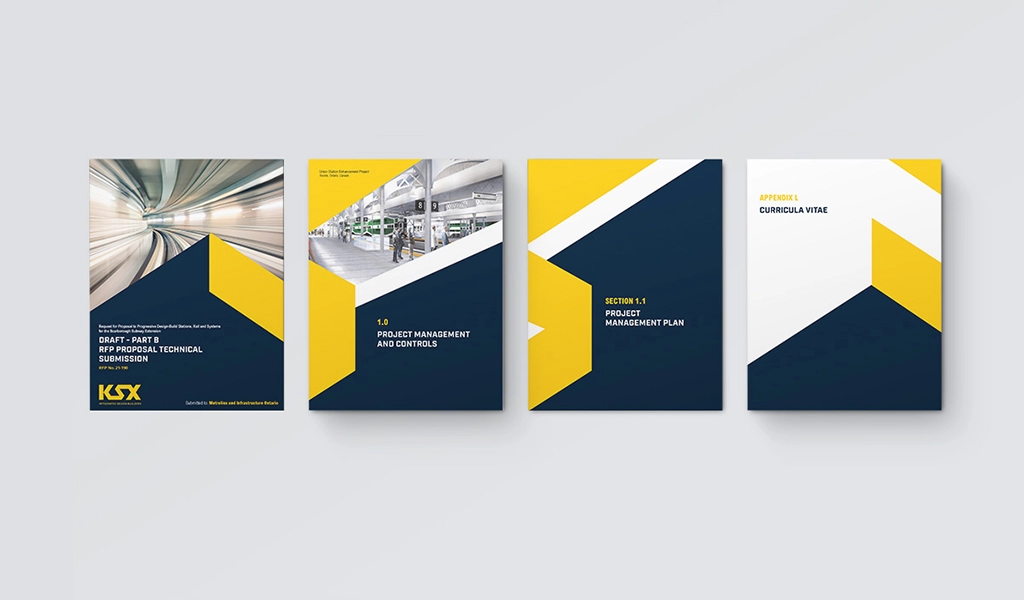
Government infrastructure proposals at this scale are not simply documents. They are a visual argument. The evaluating body needs to understand not just what a team plans to do, but how they think, how they are organized, and whether they can manage complexity at scale. The design had to do serious communicative work across hundreds of pages while maintaining a consistent visual language that reinforced the team’s credibility and professionalism.
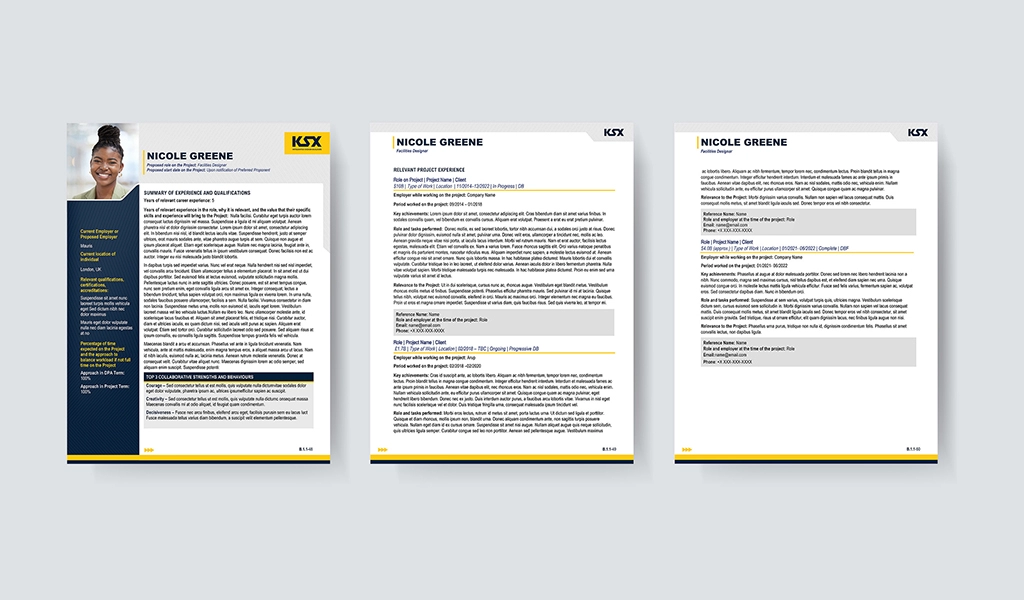
The strategic imperative was clarity at scale. With content arriving from engineers, project managers, technical specialists, and business development leads across multiple companies, the risk was fragmentation: a proposal that felt like many different voices rather than one unified team. Every design decision was made in service of coherence: consistent typography, a disciplined colour system, standardized diagram conventions, and a layout structure that could accommodate wildly different content types without losing visual integrity.
The choice to build the proposal in Word rather than InDesign was a deliberate concession to the realities of large-team collaboration. With hundreds of contributors needing to work directly in the document, InDesign was not a viable production environment for the body of the proposal. Instead, all graphics were produced in InDesign and Illustrator and flowed into Word, which required establishing strict graphic specifications and file handling protocols to maintain quality and consistency throughout.
Process Documentation
Managing a pursuit of this scale requires a design operation that runs like a production studio. From the outset, I established tracking systems to monitor the status of every graphic: what had been briefed, what was in progress, what was in review, and what was complete. With 450+ graphics in scope, no single task could be allowed to disappear into the pipeline without visibility.
Weekly coordination with proposal and technical leads translated into a rolling priority list that shifted constantly as content evolved, new RFP responses were issued, and internal review deadlines approached. A single government addendum or clarification could reframe a section of the proposal strategy overnight, which meant graphics that had already been completed sometimes needed to be reconceived entirely. Flexibility and speed without sacrificing quality was a persistent tension throughout.
Additional designers joined the team during peak colour review periods, typically one to two at a time for short, intensive bursts. Onboarding them quickly required clear documentation and strong communication: briefing them on brand standards, walking them through the template architecture, and integrating their output seamlessly into an already active pipeline.
This project also coincided with the early weeks of a new position at Kiewit. Establishing credibility, learning the team structure, understanding working styles, and building the relationships needed to lead a pursuit of this scale, all while managing the design workload, required drawing heavily on previous experience in high-pressure proposal environments. The ability to build trust quickly and project confidence in an unfamiliar context was as important as the design work itself.
Challenges & Solutions
The defining challenge of this project was volume. Not just the number of graphics, but the pace at which they needed to be produced, revised, and adapted to an evolving proposal strategy.
Proposal environments operate under conditions that few other design contexts replicate. Deadlines are fixed and non-negotiable. Content arrives late, changes frequently, and comes from stakeholders with varying levels of understanding of what makes design effective. Managing this required a production discipline that prioritized communication above everything else: being transparent about capacity, flagging risks early, and maintaining a clear picture of where things stood at all times.
The stakeholder environment added another dimension. With contributors from multiple companies operating within the consortium, the hierarchy of authority was not always clear. Technical leads, proposal directors, and client-facing representatives sometimes held competing views on direction or priority. Navigating that required knowing when to offer a recommendation, when to ask for a decision to be escalated, and when to find a workable compromise without losing momentum.
The Word production environment presented persistent quality control challenges. Maintaining the integrity of complex graphics within a document that many non-designers were working on simultaneously required clear protocols and regular checks. Establishing those standards early and communicating them clearly to the broader team was essential to keeping the output consistent from first draft to final submission.
OUTCOME & REFLECTION
The proposal was completed to submission standard and recognized by senior leadership across Kiewit and the broader KSX consortium as one of the strongest pursuit packages the team had seen. The volume and quality of the graphic work, and the organizational capability required to produce it, were specifically noted by proposal leadership.
The experience was a direct contributor to my promotion to Creative Lead for Canada at Kiewit, a recognition of both the creative output and the leadership demonstrated throughout the pursuit.
This project represents something I consider a core professional strength: the ability to lead creative work at scale in high-pressure, high-complexity environments, managing output, people, and process simultaneously without losing sight of the quality and clarity that makes design effective in the first place.